
Solar PV and a Heat Pump: How to Use Surplus for Heating and Hot Water
Solar panels generate power during the day, and a heat pump turns 1 kWh into roughly 4 kWh of heat. We explain how to channel solar surplus into hot water and heating, and what is changing in the Nová zelená úsporám (NZÚ) 2026 subsidies.
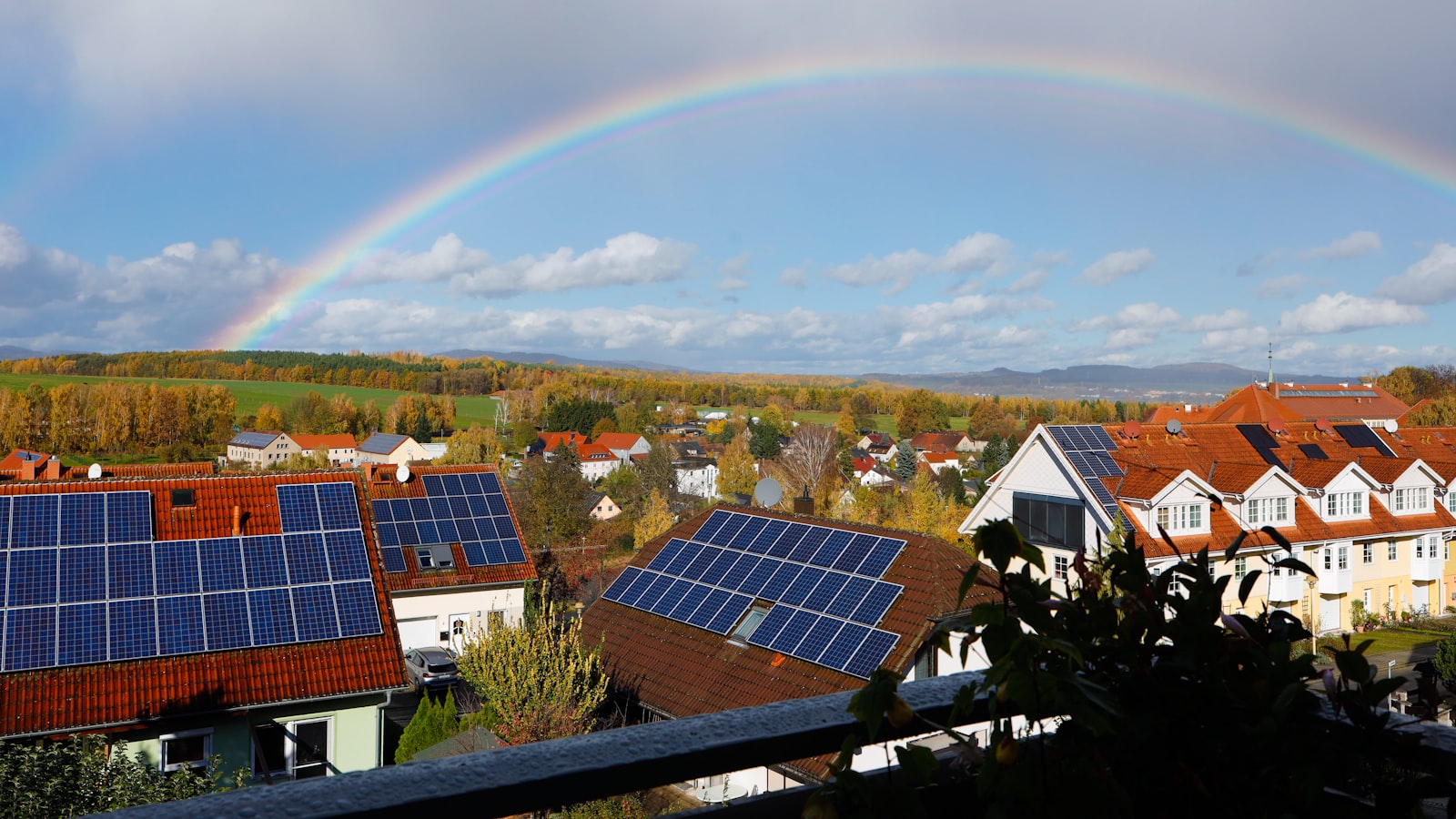
Solar PV and a heat pump make an ideal pairing: solar panels generate electricity during the day, exactly when a heat pump can be heating hot water or running the heating. A quality air-to-water heat pump with a seasonal coefficient of performance (SCOP) of around 4 turns 1 kWh of electricity into roughly 4 kWh of heat – and if that electricity comes from your own panels, it is practically free. Instead of selling your surplus to the grid for a few crowns, you turn it into heat that your home actually uses. In this article we explain how to direct solar surplus towards heating and hot water, what role a battery and smart control play, how to size the whole system sensibly, and what has fundamentally changed in the Nová zelená úsporám (NZÚ, the Czech state energy-savings programme) subsidies for 2026.
Why solar PV and a heat pump belong together
The main advantage lies in the economics of heat. On the D57d tariff that we use for heat pumps and electric heating, 1 kWh of heat from a heat pump works out at roughly CZK 1.1–1.2 (with an off-peak rate of around CZK 4/kWh and an SCOP of about 3.5). For comparison: direct electric heating on the same tariff turns 1 kWh of electricity into just 1 kWh of heat, which means on the order of CZK 4/kWh of heat. If that same electricity is produced by your own solar PV, the running cost of the heat is close to zero.
The catch is timing. Solar PV generates the most during the day, but a typical household consumes the most in the morning and evening. Without a smart solution, the daytime surplus flows into the grid at a low feed-in price. The goal is therefore the highest possible self-consumption rate – the share of generated energy that you use yourself at home. And this is exactly where a heat pump, water heating and thermal storage help: they can “swallow” the daytime surplus and store it as heat.
Where to store surplus: hot water, thermal storage, batteries
Surplus can be stored in several ways, and in practice it pays to combine them – from the cheapest to the most expensive.
Domestic hot water heating (DHW)
The simplest and cheapest “battery” is your hot water tank. A smart controller sends the surplus into the immersion heater, or lets the heat pump run around midday to heat the water. The tank then works as a cheap heat accumulator – the daytime sun heats water that you use in the evening when showering.
Thermal storage for heating
The second step is storing heat for space heating. With a heat pump this is usually a buffer tank that the pump “charges up” during the day when the sun is shining, and the house keeps drawing heat from it afterwards. With electric underfloor heating we can use the mass of the floor itself: in semi-storage and storage mode, the heating mats or cables are embedded in an anhydrite or concrete screed (typically a 45–55 mm layer, at least 3.5–4 cm of anhydrite above the insulation) with an installed output of roughly 80–140 W/m². The screed charges up with heat during the day and slowly radiates it into the room in the evening. It is an elegant way to store solar surplus without a single battery.
Batteries
A battery stores surplus electricity for later use on anything – from lighting to top-up heating. Under the new NZÚ 2026 programme, a battery is mandatory for subsidised solar PV, and its capacity must be at least equal to the output of the panels (capacity in kWh ≥ output in kWp). A battery is the most versatile but also the most expensive storage option, so it makes sense to add it only after you are already using the surplus efficiently for hot water and heat.
Smart control is the heart of the whole system
For everything to work automatically, you need a controller that compares solar generation against the home's consumption in real time and decides where to send the surplus. A proven priority order looks like this:
- first cover the household's immediate consumption,
- then heat the hot water in the tank,
- next charge thermal storage (buffer tank or floor),
- store the remainder in the battery,
- and only the surplus beyond all of that goes to the grid.
For electric underfloor heating we use programmable and WiFi thermostats (for example the TREO H WiFi controller), which can heat both from the daytime surplus and during the cheap night-time tariff. As of 1 January 2026, the D57d tariff offers 20 hours of off-peak rate per day – so even on days when the sun does not shine, you heat at a favourable price.
How to size the whole system
Sizing needs to be realistic – an oversized solar array whose surplus you have nowhere to store pays back slowly. What to focus on:
- Solar PV output: for an NZÚ 2026 subsidy the minimum is 3 kWp and a three-phase connection is required; we choose the actual size according to the home's consumption, the heat pump and water heating.
- Battery: in the subsidised scheme, capacity in kWh ≥ output in kWp.
- Heat pump: we recommend choosing models with a declared SCOP above 4 and verifying their performance down to low temperatures – catalogue figures tend to be optimistic and, with a poorly designed heating system, they drop significantly lower.
- Distribution: in the Šumperk area and throughout the Olomouc region the distributor is ČEZ Distribuce, so check the price list and connection terms with them, not against tables for other areas.
NZÚ 2026 subsidies: beware of outdated information
Here you need to be careful, because many websites still quote the old amounts from 2023–2025. The new programme for 2026 brings a fundamental change: an ordinary household no longer receives a direct subsidy for solar PV or a heat pump – instead, an interest-free loan is available (0%, with the interest covered by the state). For solar PV this is roughly CZK 25,000 per kWp and CZK 15,000 per kWh of battery, up to a maximum of CZK 400,000 per PV system. Direct subsidies remain only for low-income households under the NZÚ Light scheme (where a heat pump is supported with up to CZK 150,000 and solar PV with up to CZK 120,000).
Applications are submitted electronically through the AIS SFŽP system (the State Environmental Fund's online portal at zadosti.sfzp.cz) using bank-identity login; applications open on 25 June 2026, and a mandatory renovation passport from an energy specialist is part of the application. For solar PV, the house must be demonstrably completed before 1 January 2023. Because the final binding conditions take effect precisely when applications open, we recommend verifying the specific amounts directly at novazelenausporam.cz, or at sfzp.gov.cz, before submitting.
We will help you put it together smartly
We are GWP Klima – two specialists under one roof with more than ten years of experience in the field, working in Bludov and the area around Šumperk, Zábřeh, Mohelnice, Olomouc and Jeseník. We do not install solar PV itself; our strength lies in heat pumps, electric underfloor heating and controls. What we do take care of is making sure these technologies use the surplus from your solar PV as effectively as possible – from designing the heat source and storage, through setting heating priorities, to WiFi control. Get in touch for a no-obligation consultation and together we will go through what genuinely pays off in your home.
Step-by-step guide
-
Assess your generation and consumption
First, get clear on how much electricity your solar PV generates during the day and when your house consumes it. The difference reveals how much surplus you have available for water heating and space heating.
-
Set hot water heating as the priority
Direct the surplus first into the hot water tank – via the immersion heater or by heating with the heat pump around midday. The tank is the cheapest heat accumulator.
-
Add thermal storage for heating
Use the heat pump's buffer tank or electric underfloor heating in semi-storage mode (a mat in an anhydrite screed at 80–140 W/m²). The mass of the floor stores heat during the day and radiates it in the evening.
-
Add a battery
Only once heat is being used, add a battery to store the remaining surplus. In the subsidised NZÚ 2026 scheme it must have a capacity at least equal to the solar PV output (kWh ≥ kWp).
-
Tie it all together with smart control
Set up a controller that compares generation with consumption and sends the surplus according to priorities: house, hot water, thermal storage, battery, grid. WiFi thermostats also take advantage of the cheap night-time rate of the D57d tariff.