NZÚ and photovoltaics 2026: combining with a heat pump and heating
Nová zelená úsporám 2026 has turned the rules upside down: ordinary households now get an interest-free loan for both photovoltaics and a heat pump, while direct grants remain only in NZÚ Light. We will advise you on the combination and the application.
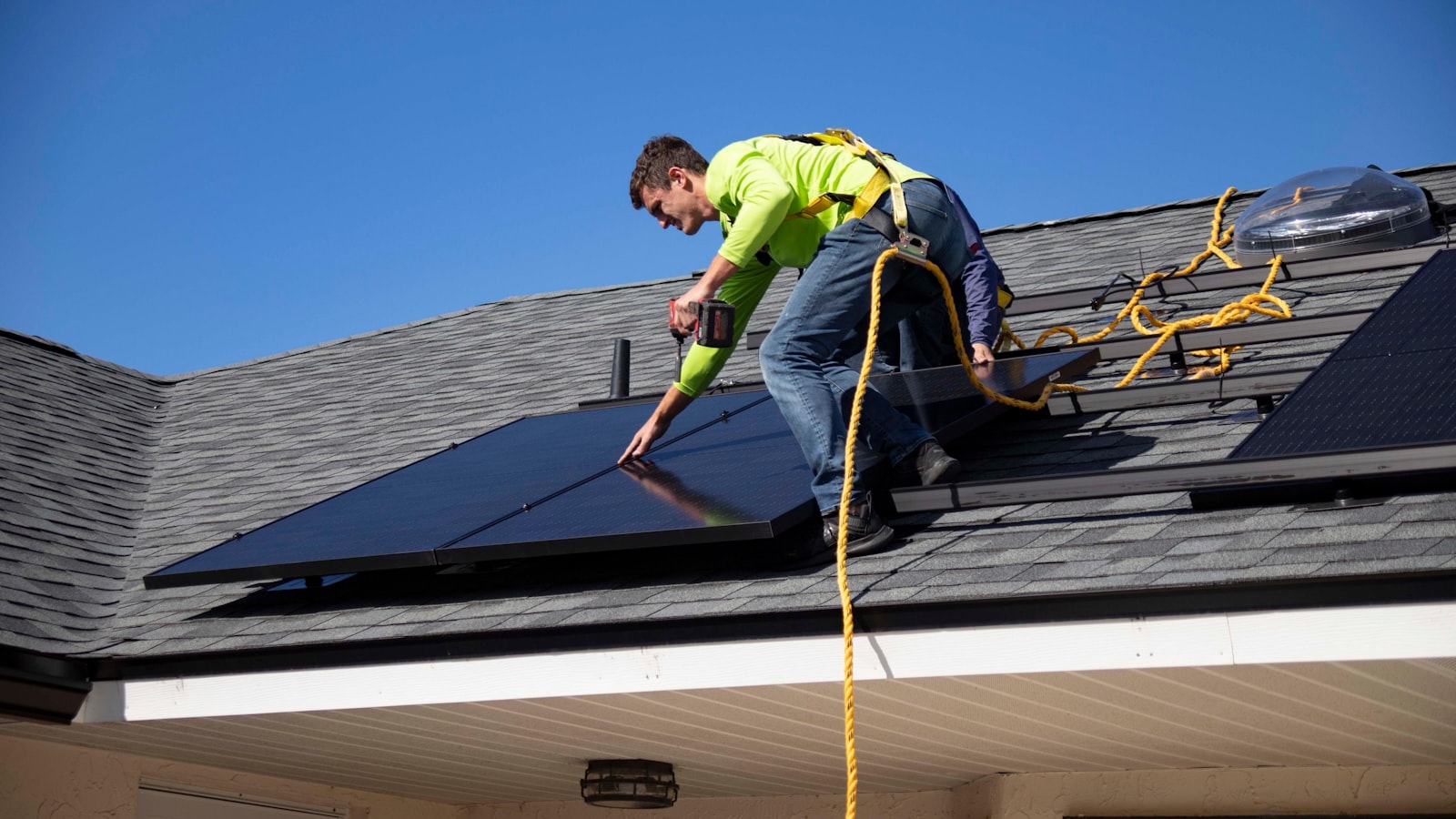
Nová zelená úsporám (NZÚ, the Czech state energy-savings programme) has undergone a fundamental change for 2026: ordinary households can no longer receive a direct grant for photovoltaics or a heat pump, but instead an interest-free loan (0 %, with the state covering the interest for the entire term). Direct grants remain only for low-income households in the NZÚ Light programme. Applications open on 25 June 2026, exclusively online through the AIS SFŽP system (the State Environmental Fund's electronic portal). If you are considering photovoltaics in the Šumperk area combined with a heat pump or electric heating, it pays to understand the rules before you have a quote drawn up – and above all not to rely on the old figures from 2023–2025 that are still circulating online.
What has fundamentally changed in NZÚ 2026
The most important change to grasp first: from 2026, direct grants for ordinary family houses are abolished and replaced by an interest-free loan. Through the State Environmental Fund (SFŽP), the state pays the interest for the entire repayment period, and the applicant repays only the principal – that is, only as much as they actually borrowed.
Indicative loan parameters for ordinary households (before signing, we recommend verifying the current binding SFŽP guidelines):
- 0% interest – the state pays the interest, you repay only the amount borrowed.
- Minimum loan amount 100 000 CZK.
- Depending on the scope of work, the programme distinguishes two tiers: roughly up to 750 000 CZK for partial renovations and up to 2 000 000 CZK for a comprehensive renovation of a family house.
- A longer repayment term (around 10 years or more), depending on the type of measure.
Beware of outdated figures. Even in mid-2026, many commercial websites still quote direct grants for an air-to-water heat pump of around 80 000–140 000 CZK, or 15 000 CZK/kWp for photovoltaics plus a 100 000 CZK combination bonus. Those are the figures of the old 2023–2025 programme. Under the new model, an ordinary household receives no direct grant for either photovoltaics or a heat pump – only an interest-free loan.
A renovation passport is now mandatory
Without a renovation passport, you cannot submit an application for either the loan or NZÚ Light. It is issued by a certified energy specialist and describes how to renovate the house step by step. For low-income households under NZÚ Light it is free of charge. The network of advisers and renovation passports has been expanding since April 2026, so we recommend arranging yours in good time.
Photovoltaics in NZÚ 2026: rates and conditions
For an ordinary household, photovoltaics in 2026 are supported through an interest-free loan. Indicative rates and conditions:
- 25 000 CZK for every 1 kWp of installed panel capacity.
- 15 000 CZK for every 1 kWh of battery capacity.
- Maximum loan for photovoltaics 400 000 CZK.
- Minimum installed capacity 3 kWp and a three-phase connection.
- A battery is mandatory – its capacity in kWh must be at least equal to the photovoltaic capacity in kWp.
The property's age is also an important condition: while most measures require the house to have been completed before 1 July 2013, for photovoltaics it is enough that the house was demonstrably completed before 1 January 2023. The applicant must live in the house after the installation. A small note on the grid connection: in the Šumperk area and the Olomouc Region the distributor is EG.D, so you arrange the connection request and tariff setup with them.
Combining photovoltaics with a heat pump and heating
Combining photovoltaics with a heat pump or electric heating makes sense mainly in terms of running costs. Both a heat pump and electric underfloor heating are powered by electricity – and during the transitional seasons and in daylight hours the roof can supply it. A self-generated solar kilowatt-hour is significantly cheaper than a purchased one, so self-consumption increases and the combined payback period of the two technologies shortens.
On top of that, the 2026 energy-market situation also works in favour of electric heating:
- Heat pumps and direct electric heaters run on the D57d distribution tariff with 20 hours of the low rate per day, which covers almost the entire heating consumption.
- From 2026, households no longer pay the POZE levy (the Czech levy for supported energy sources), a saving on the order of 599 CZK for every MWh consumed, which further reduces running costs.
- A modern air-to-water heat pump, when well designed, achieves a real seasonal coefficient of performance (SCOP) of roughly 3 to 4 – so from one kilowatt-hour of electricity it produces around three to four times as much heat. The key, however, is good design and installation; a high catalogue SCOP can drop significantly in practice (even below 3) with poor sizing or a higher heating-system temperature.
From a subsidy standpoint, the combination should be viewed realistically. For an ordinary household, both photovoltaics and a heat pump come as an interest-free loan, not a direct grant. The old combination bonuses (for example 100 000 CZK for pairing photovoltaics with a heat source) were tied to the 2023–2025 programme and may not exist in the same form under the 2026 loan model – so we do not recommend relying on them, and it is better to verify the current conditions at novazelenausporam.cz.
NZÚ Light: direct grants for low-income households
In 2026, direct grants remain only for vulnerable and low-income households under the NZÚ Light programme. In simplified terms, eligibility extends to very low-income households up to the 3rd income decile, old-age pensioners with income up to the 5th decile living in an uninsulated house (energy class E–G), people on a third-degree disability pension up to the 5th decile, and households receiving state social-support benefits.
Approximate ranges of NZÚ Light 2026 direct grants by measure:
- Photovoltaics up to 120 000 CZK (a small PV system, or a PV system with water heating).
- Heat source replacement 50 000–150 000 CZK – an air-to-water or ground-to-water heat pump up to 150 000 CZK, an air-to-air heat pump up to 100 000 CZK.
- Insulation 50 000–250 000 CZK, hot-water preparation 70 000 CZK.
- When several measures are combined, an indicative combination bonus of 30 000 CZK.
In addition, an interest-free loan (up to roughly 400 000 CZK) can be drawn to finance the remainder. The exact NZÚ Light amounts and conditions were not published until May 2026, and the final binding wording applies with the opening of applications on 25 June 2026, so we recommend verifying the limit values directly with SFŽP before applying.
How to apply step by step
The application is submitted exclusively online through the AIS SFŽP system (the zadosti.sfzp.cz portal); you log in via an electronic identity – most often bank identity (BankID), or alternatively NIA or the eGovernment Mobile Key. Applications (both the loan and NZÚ Light) opened on 25 June 2026 at 10:00; banks were due to roll out the interest-free loan offer itself from September 2026.
We are happy to help both with the application and with the technical side of the installation in the Šumperk, Zábřeh, Mohelnice, Jeseník, Šternberk and Bludov region – from designing the system to documenting the completed work.
When the combination pays off and where to start
Photovoltaics combined with a heat pump or electric underfloor heating is no longer about a one-off grant, but about smart financing through an interest-free loan and, above all, about consistently low running costs over the long term. Whether the combination pays off in your particular case depends on the age of the house, its insulation, your consumption and the type of heating system.
We are two independent specialists with more than ten years of experience in the field – Robert in air conditioning and heat pumps, David in heat recovery ventilation and electric heating. We will design your heat pump and electric heating to work as well as possible with your photovoltaics, and we will help you make sense of the current NZÚ conditions. Get in touch for a no-obligation consultation – together we will go through your house and the grant or loan options and propose a solution that makes sense both economically and technically.
Step-by-step guide
-
Obtain a renovation passport
Contact a certified energy specialist to draw up your renovation passport. It is mandatory for both the loan and NZÚ Light, and it is free for low-income households. Without it you cannot submit an application.
-
Set up an electronic identity
To log in to the AIS SFŽP system you need electronic identification – most often bank identity (BankID), or alternatively NIA or the eGovernment Mobile Key.
-
Prepare documents for the house and your project
Gather the property documents and your proposed solution (photovoltaics, heat pump, heating). Check the conditions, especially the age of the house – for photovoltaics, completion before 1 January 2023, otherwise before 1 July 2013.
-
Submit the application via AIS SFŽP
Fill in and submit the application online on the zadosti.sfzp.cz portal. Applications for both the interest-free loan and NZÚ Light opened on 25 June 2026.
-
Have the work done by a qualified company
Have the installation carried out by a qualified contractor with the necessary authorisations (for heat pumps and air conditioning, for example an F-gases certificate). Good design and installation are decisive for real savings.
-
Document the work and draw down the support
Once finished, document the completed work with the required documents. The interest-free loan is then drawn down, or, where applicable, the direct grant is paid out under NZÚ Light.