Heat Pump Noise and Neighbours: Limits, Placement and Avoiding Disputes
A heat pump must meet 50 dB by day and 40 dB at night at a neighbour's facade. We explain how to position the outdoor unit, which noise-reduction measures to choose and how to avoid disputes with neighbours.
From a legal standpoint, a heat pump's outdoor unit is a stationary noise source and, at a neighbour's facade, it must meet a hygiene limit of 50 dB by day (6 a.m.–10 p.m.) and 40 dB at night (10 p.m.–6 a.m.) under Government Regulation No. 272/2011 Coll. Because the compressor often emits a pronounced tonal component, an additional −5 dB correction applies, so the effective night-time ceiling at the neighbour's facade can drop to roughly 35 dB. The good news is that in most neighbour disputes, heat pump noise is not caused by the technology itself but by poor placement and a lack of communication. Both can be addressed before you ever mount the unit on the wall.
Heat pump noise in decibels: how loud is the outdoor unit
The noise from an outdoor unit comes mainly from the fan and the compressor and is measured in A-weighted decibels, i.e. in dB(A), a unit that reflects the sensitivity of the human ear. Decibels are a logarithmic scale, so a difference of a few decibels that looks negligible on paper is actually heard as a noticeable change in loudness. That is exactly why it makes sense to compare units by their acoustic parameters just as carefully as by their heating output or SCOP.
For every unit, manufacturers state the sound power level or sound pressure level – we recommend paying attention to these figures as early as the selection stage. A simple rule applies here: the farther the unit is from the neighbour's windows and the better it is placed and oriented, the lower the noise level you will measure at their facade. Noise drops sharply with increasing distance from the source, so a few extra metres and a suitable direction for the air outlet make a big difference. The operating state also plays a role – a unit is at its loudest at full output during frost and in the defrost cycle, when its operation briefly reverses.
Hygiene noise limits in the Czech Republic: daytime and night-time values
The key regulation is Government Regulation No. 272/2011 Coll. (as amended by Regulation 217/2016 Coll.). For noise from stationary sources in the protected outdoor space of buildings, it sets the basic limit:
- 50 dB by day (6 a.m.–10 p.m.),
- 40 dB at night (10 p.m.–6 a.m.) – this night-time value already includes a −10 dB correction.
What matters most is where the limit is assessed. It is not at the source, but in the protected outdoor space of the building, which is the area up to 2 m in front of part of the external envelope (facade) of a residential building. The limit must therefore be met right at the neighbour's, at their windows and facade, not at your unit. The reference period is the 8 least favourable hours during the day and the single noisiest hour at night.
For heat pumps, one more thing is decisive: for noise with a pronounced tonal or impulse component, which is typical of an outdoor unit's compressor, a −5 dB correction applies. The night-time limit for such a source can then effectively drop from 40 dB to around 35 dB at the neighbour's facade. Night-time operation tends to be the most sensitive, because between 10 p.m. and 6 a.m. the surroundings are quiet and every decibel is more noticeable.
Correct placement and clearance of the outdoor unit
Placement is the cheapest yet most effective noise-reduction measure – it costs nothing to address at the design stage. On installations in the Šumperk region, in Zábřeh, Mohelnice and Bludov, we always determine the unit's position with the neighbouring plot in mind, not just by the shortest pipe run. We recommend:
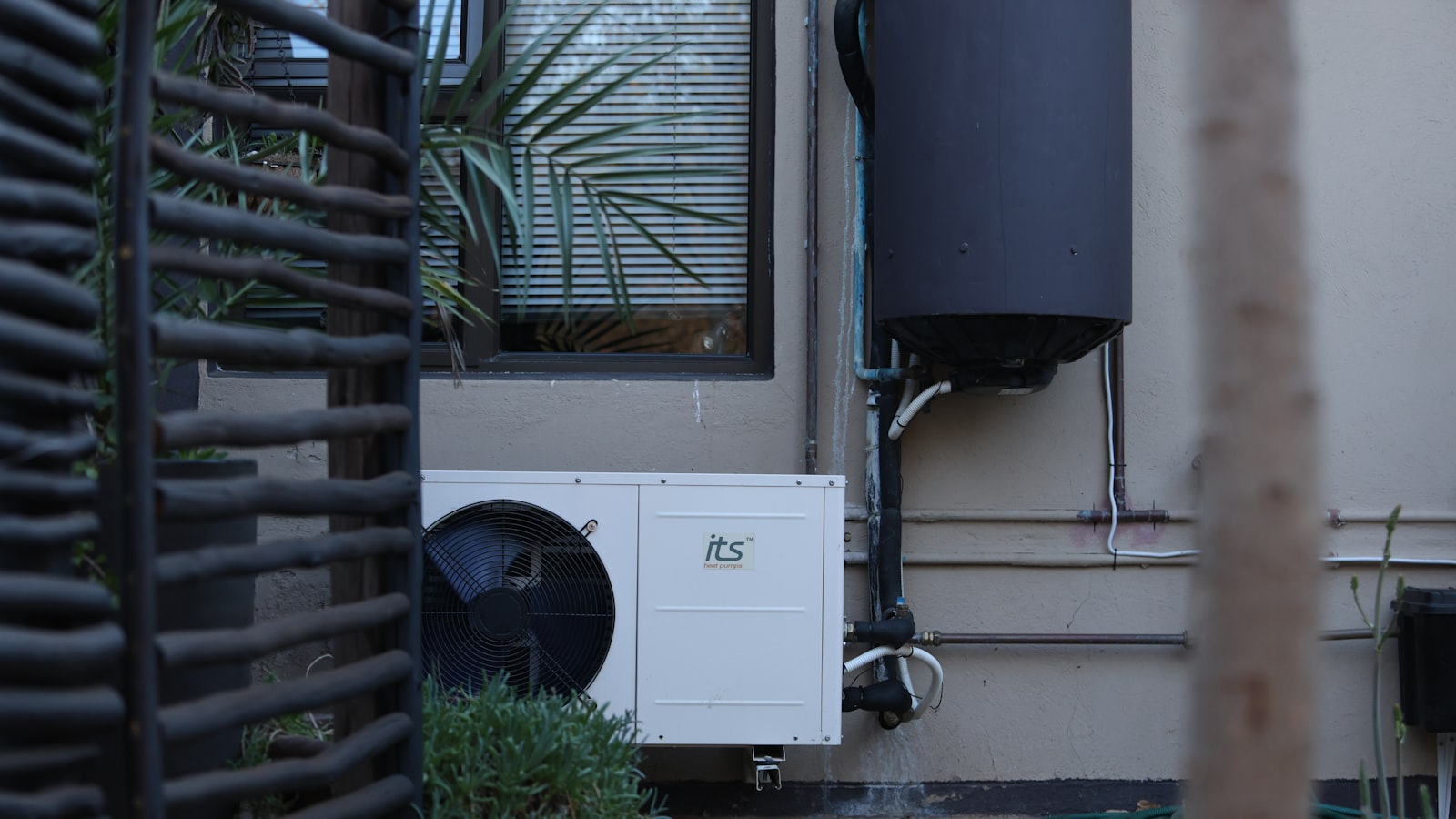
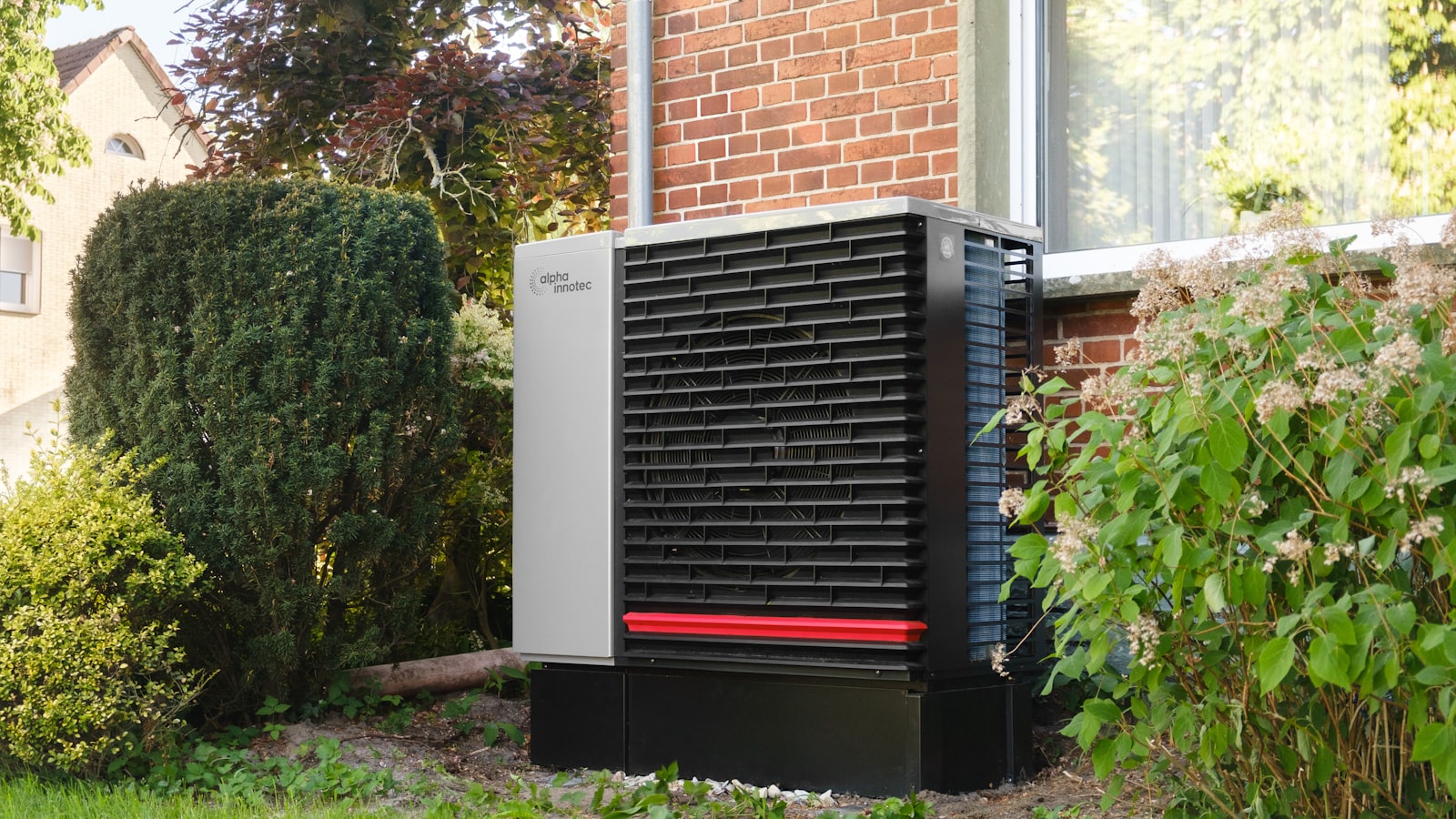
- Directing the air outlet away from the neighbour's windows, terraces and bedrooms – ideally into your own garden or into open space.
- Not placing the unit in a corner between two walls or in a narrow alley between buildings. Sound reflecting off the walls amplifies and concentrates the noise.
- Keeping a reasonable clearance from the property boundary and from the nearest residential windows. The law does not set a specific distance in metres – what matters is the resulting level at the neighbour's facade.
- Choosing a ground-mounted or free-standing bracket installation rather than mounting directly on the home's living-area wall, through which vibrations could be transmitted inside.
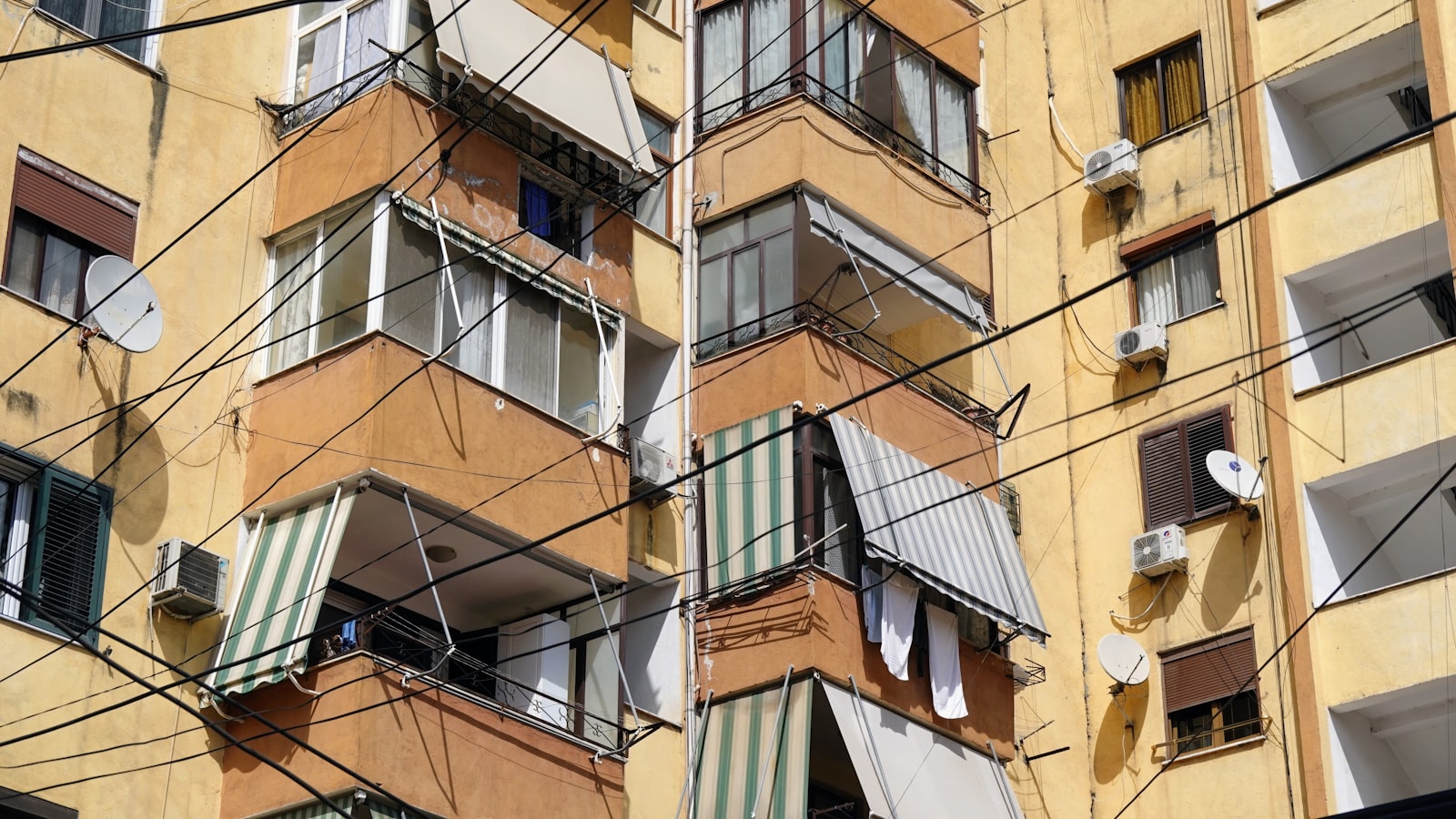
In terraced housing and on smaller plots, of which there are quite a few in the centres of Šumperk or Jeseník, thoughtful placement is all the more important, because the neighbour's facade tends to be close.
Noise-reduction and anti-vibration measures
Anti-vibration components
Much of what a neighbour perceives as an annoying hum is not airborne decibels but vibrations transmitted through the structure. That is why we fit anti-vibration pads and silent blocks under the unit and under the brackets to dampen the mechanical vibration and prevent it from spreading into the masonry. With facade mounting, this is practically a must.
Quiet night mode
The vast majority of modern heat pumps offer a quiet night mode – within a set time window, it temporarily reduces the fan speed and limits output, so the noise level drops exactly when the stricter night-time limit applies. For peaceful coexistence with neighbours, it is one of the most effective yet cost-free tools, and we recommend enabling it right at commissioning.
Acoustic enclosure and screens
Where neither placement nor quiet mode is enough, an acoustic enclosure or a noise barrier around the unit can help. There is, however, a crucial caveat here: the enclosure must be designed to dampen noise without throttling the airflow – otherwise the heating output and efficiency would drop. That is why we only consider it after evaluating the real situation, not automatically.
How to avoid a dispute with your neighbour
The owner of the outdoor unit is responsible for complying with the hygiene limits under Act No. 258/2000 Coll. on the protection of public health and for being considerate towards the neighbourhood under the Civil Code, Act No. 89/2012 Coll. If a dispute arises, the noise level is not judged by an estimate or a table, but by an accredited acoustic measurement or study requested by the regional public health authority. But before it comes to measurement, it pays to prevent the conflict entirely:
- Talk to your neighbour in advance. A brief note that you are planning a heat pump and where the unit will go often heads off a future complaint before it arises.
- Build in a margin. When designing the system, we recommend not staying right at the limit but keeping a margin below the night-time value – operating states and the age of the equipment increase noise slightly over time.
- Rely on quality installation. A poorly anchored or overloaded unit is noisy even though it has good catalogue figures.
In our experience, noise can almost always be managed by combining correct placement, anti-vibration components and a quiet night mode, without sacrificing your operating savings.
Conclusion
A quiet heat pump is not a matter of luck but of design. When noise is addressed from the start – through the choice of unit, its placement and suitable settings – meeting the 50/40 dB limits at the neighbour's is realistic and relationships stay friendly. As two specialists with more than ten years of experience, we design and install heat pumps in the Šumperk region and across the whole Olomouc Region so that they are both economical and considerate of their surroundings. If you are working out where to place the unit or want to avoid a dispute with your neighbour, get in touch with us for a no-obligation consultation – we will go over both the position and the noise-reduction measures before installation.
Step-by-step guide
-
Plan the placement as early as the design stage
Determine the outdoor unit's position with the neighbouring plot in mind, not just by the shortest pipe run. Direct the air outlet away from the neighbour's windows, terraces and bedrooms, and avoid narrow corners between walls where sound reflects and amplifies.
-
Choose a sufficiently quiet unit with a margin
Compare the sound power level of units just as carefully as the heating output and SCOP. Do not stay right at the hygiene limit; keep a margin below the 40 dB night-time value, because operating states and ageing of the equipment increase noise slightly over time.
-
Keep the clearance and orientation away from the neighbour's windows
Noise drops sharply with increasing distance from the source. A greater clearance from the property boundary and from the neighbour's nearest residential windows, together with a suitable orientation of the unit, help meet the limit at their facade.
-
Use anti-vibration components
Fit anti-vibration pads and silent blocks under the unit and the brackets. They dampen mechanical vibration and prevent its transmission into the masonry, which is a common cause of the hum the neighbour perceives inside the house.
-
Activate the quiet night mode
Set up the quiet night mode right at commissioning; within the 10 p.m.–6 a.m. window it reduces the fan speed and output. The noise level thus drops exactly when the stricter night-time limit applies and the surroundings are at their quietest.
-
Communicate with your neighbour and, in case of a dispute, provide measurements
Inform your neighbour about the planned installation and the unit's location in advance. If a dispute arises nonetheless, the noise level will be assessed by an accredited acoustic measurement requested by the regional public health authority at the neighbour's facade.