
Heat recovery ventilation for a flat during renovation: decentralized or centralized?
Centralized heat recovery with ductwork, or decentralized units in the wall? We explain why, for HRV in prefab flats around Šumperk, we most often choose decentralized units and how we handle efficiency, noise and condensate.
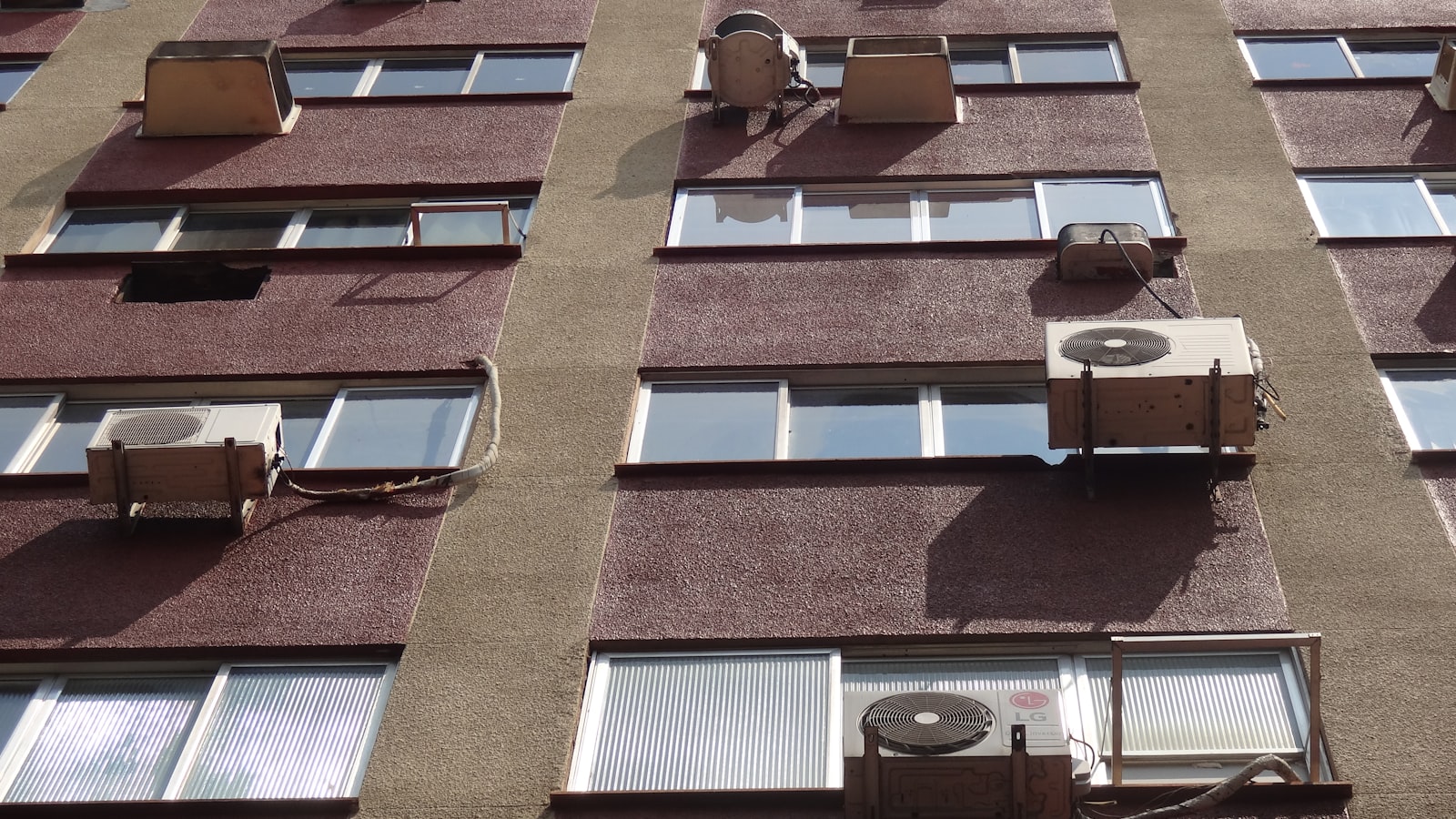
Heat recovery ventilation for a flat can be approached in two ways during a renovation: a centralized unit with air ductwork throughout the flat, or decentralized (paired) units set into the external wall. In prefab apartment-block flats, where there is no room for suspended ceilings and duct routing, we most often go for decentralized heat recovery ventilation – compact units that need no ductwork and whose regenerative ceramic core returns up to 94 % of the heat. A centralized unit with an efficiency of 70–95 % makes sense where ductwork can realistically be run. Below we explain when each solution is suitable and what to watch out for during a renovation.
Why walls start to grow mould after you replace the windows
The vast majority of flat renovations start with new windows and insulation. However, this significantly reduces the natural air infiltration we were used to with old, leaky windows. Moisture from cooking, drying laundry and breathing has no way to escape, it condenses on cooler spots (corners by the windows, behind furniture) and creates the ideal environment for mould.
The solution is controlled ventilation with heat recovery – a managed exchange of air during which you lose no heat. The aim is to keep the relative humidity in the 40–60 % range (40–50 % is cited as the best compromise). Above 60 % the proportion of surviving dust mites and microorganisms almost doubles and the risk of mould rises; below roughly 30 %, on the other hand, the mucous membranes dry out. Heat recovery ventilation takes care of this for you, without your having to open the windows into the frost several times a day.
Centralized heat recovery ventilation: one unit, ductwork throughout the flat
With a centralized solution, a network of air ducts runs from a single heat recovery unit: fresh air is distributed to the living spaces (bedroom, living room) and stale air is extracted from the kitchen and bathroom. The two streams meet in the exchanger, where the outgoing warm air preheats the incoming air. The heat recovery efficiency of quality units is around 90 %, with top models reaching up to 95 %.
A centralized system is elegant in new builds and larger renovations, where it is planned for from the start. In a flat, however, it often runs up against the physics of the building:
- Low ceilings and no suspended ceilings – ductwork needs space. In a prefab apartment-block flat with a ceiling height of around 2.5 m, lowering the ceiling by the necessary few centimetres eats into your living comfort.
- A layout with no room for ductwork – running air ducts through every room means interfering with walls, thresholds and doors, which is hard to do in a finished flat.
- Where to put the unit – a centralized unit, together with access for servicing, needs a technical cabinet or closet that a flat often does not have.
If you are planning the renovation down to the bare walls and allowing for suspended ceilings, a centralized unit is in play. As soon as you are dealing with a finished prefab flat with no spare room, you will usually hit a wall.
Decentralized (paired) heat recovery ventilation: the solution for prefab flats
A decentralized unit is a small heat recovery device set directly into the external wall through a single core-drilled hole – no ductwork, no suspended ceilings. Inside is a regenerative ceramic or PET exchanger that returns up to 94 % of the heat; an enthalpy version additionally recovers part of the moisture passively (roughly around 45 %), which helps keep a comfortable humidity in the 40–60 % range.
It is important to understand that these units work in pairs and in cycles. For a while one unit extracts warm air outside and charges the ceramic core with heat, while at the same time the other draws in fresh air from outside and preheats it. After several tens of seconds the fans reverse and the roles swap. That is why at least two units are fitted – a single unit without a pair would create positive or negative pressure in the flat. One module can ventilate a room of roughly up to 50 m² (at a height of 2.55 m), with an adjustable flow rate of the order of 10–100 m³/h.
It is precisely this simplicity that makes decentralized heat recovery ventilation ideal for prefab flats in Šumperk, Zábřeh, Mohelnice or Bludov. In the flats where we are used to working, a decentralized system is typically fitted within a single day, with no demolition and no lowering of ceilings.
Efficiency, noise, condensate and price – a direct comparison
Efficiency
On paper, both solutions are comparable: centralized units 70–95 %, quality decentralized units up to 94 %. However, the manufacturers' figures are laboratory maximums at balanced flow rates – in reality the efficiency drops with unbalanced ventilation or a clogged filter. The practical difference is therefore often made not by the label, but by the quality of the design and installation.
Noise
In a flat being done for the sake of peaceful living, noise is crucial. Decentralized units are very quiet – manufacturers quote figures from approx. 8.4 dB (LpA in a small room) at the lowest setting. At night they can therefore be run in a subdued mode without disturbing sleep. With a centralized system, we deal with noise using silencers in the air ducts and by placing the unit away from bedrooms.
Condensate drainage
Here is a practical difference. A centralized unit separates the warm and cold streams in a plate exchanger, where water condenses – which is why it needs a connection to a condensate drain (waste pipe, trap). A decentralized paired unit works regeneratively: it largely returns the moisture captured in the core during the reverse cycle, so it usually does not need a permanent condensate drain. That is another reason why a decentralized system is easier to fit into a finished flat.
Price and maintenance
A decentralized solution has lower purchase costs and simpler maintenance – there is no ductwork design, no air ducts and no building work. A centralized unit is more demanding to invest in, but it can serve the whole flat with a single unit. We always base the specific price on the number of rooms and the condition of the flat, which is why we only quote it after an inspection.
For maintenance, the same applies to both versions: check the filters at least every 3 months. Coarse filters (today rated under the ISO 16890 standard as ISO Coarse, formerly G4) are cleaned roughly every 3 months, while fine filters (ePM1, formerly F7) are replaced after 4–6 months – they cannot be washed, as this would damage them. In practice this works out to a replacement once or twice a year. A clogged filter means lower performance, weaker airflow, and higher noise and power consumption.
How we go about designing heat recovery ventilation for a flat
We never make the centralized vs. decentralized decision from behind a desk. Our process is always the same:
- Inspection and survey – we look at the layout, the ceiling height and the possibility of running ductwork. That decides whether a centralized unit is in play at all.
- Choice of system – for prefab flats with no spare room we propose decentralized paired units; for renovations with suspended ceilings we consider a centralized unit.
- Design of units and placement – we determine the number of units, their positions in the external walls and the required flow rates according to the size of the rooms.
- Installation – core-drilling into the external wall, fitting the units, and for a centralized system the ductwork and condensate drainage.
- Commissioning and handover – we set up balanced operation and show you how to operate it and change the filters.
We will help you choose
We are GWP Klima – two specialists with more than ten years of experience in the field, who routinely install ventilation and heat recovery systems in flats throughout the Šumperk, Zábřeh and Jeseník areas. Ventilation and heat recovery are my (David's) speciality, and I know that with a flat renovation it comes down to a few centimetres and a good design. If you are wondering what kind of ventilation will fit in your flat, get in touch with us on +420 728 977 209 or come for a no-obligation consultation – we will go through the layout and propose a solution that makes sense for your particular flat.
Step-by-step guide
-
Inspection and survey of the flat
We assess the layout, the ceiling height and the possibility of running ductwork. That decides whether centralized heat recovery ventilation is feasible at all, or whether we will go the route of decentralized units.
-
Choice of system
For prefab flats with no spare room for suspended ceilings, we propose decentralized paired units in the external wall. For renovations where suspended ceilings and ductwork are planned for, we consider a centralized unit.
-
Design of units and placement
We determine the number of units, their positions in the external walls and the required air flow rates according to the size of each room. We always fit decentralized units in pairs to balance the pressure.
-
Installation
We carry out the core-drilling into the external wall and fit the units. For a centralized system we additionally run the air ducts and provide condensate drainage to the waste pipe.
-
Commissioning and handover
We set up balanced operation, explain the controls and modes, and show you how and when to change the filters so the unit keeps its performance for years to come.