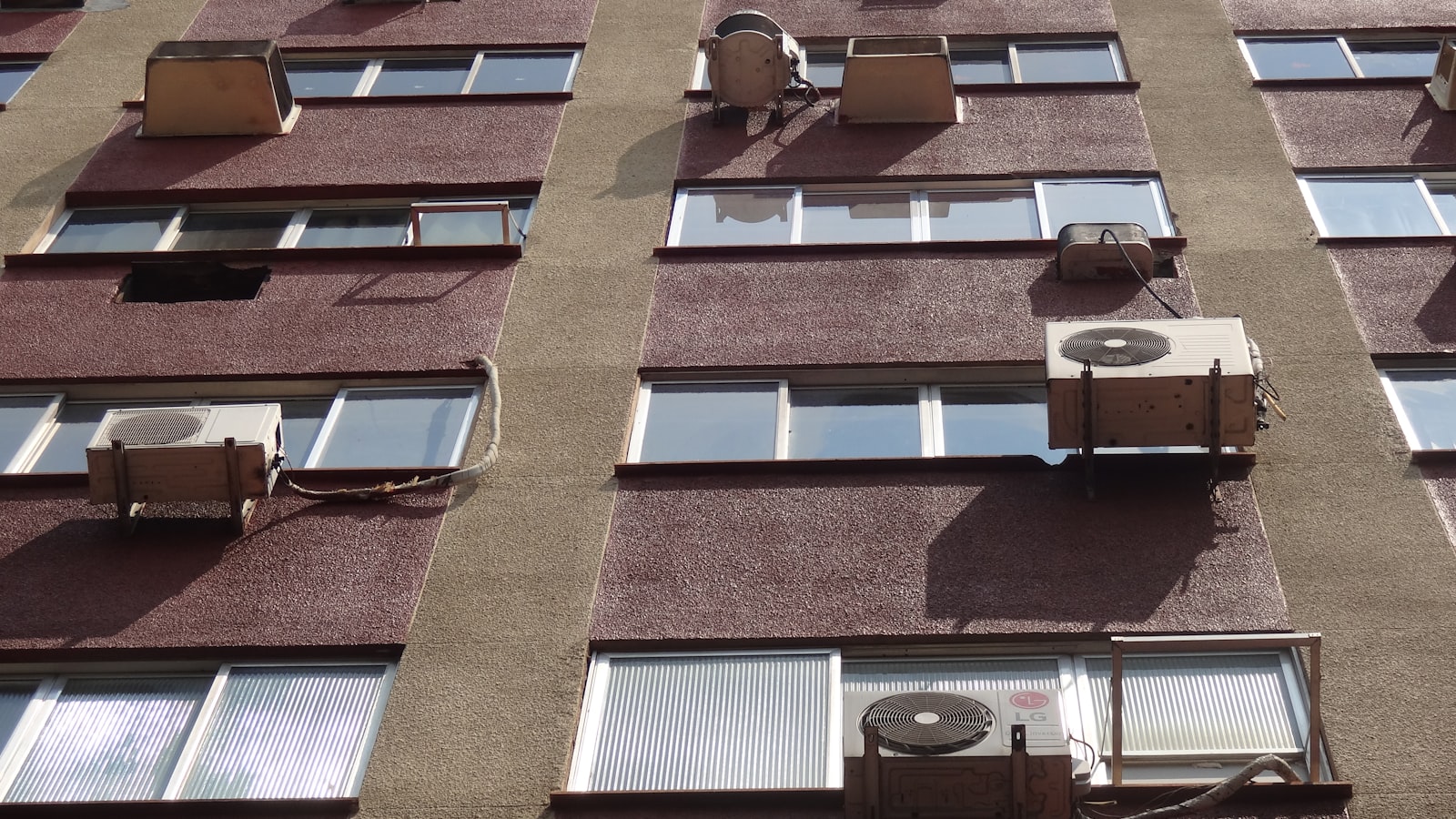
Damp and Mould in Flats: How Heat Recovery Ventilation Helps
Mould in a flat after insulation and new windows comes from trapped moisture. We explain why opening a window isn't enough and how heat recovery ventilation keeps humidity in the healthy 40–60% range.
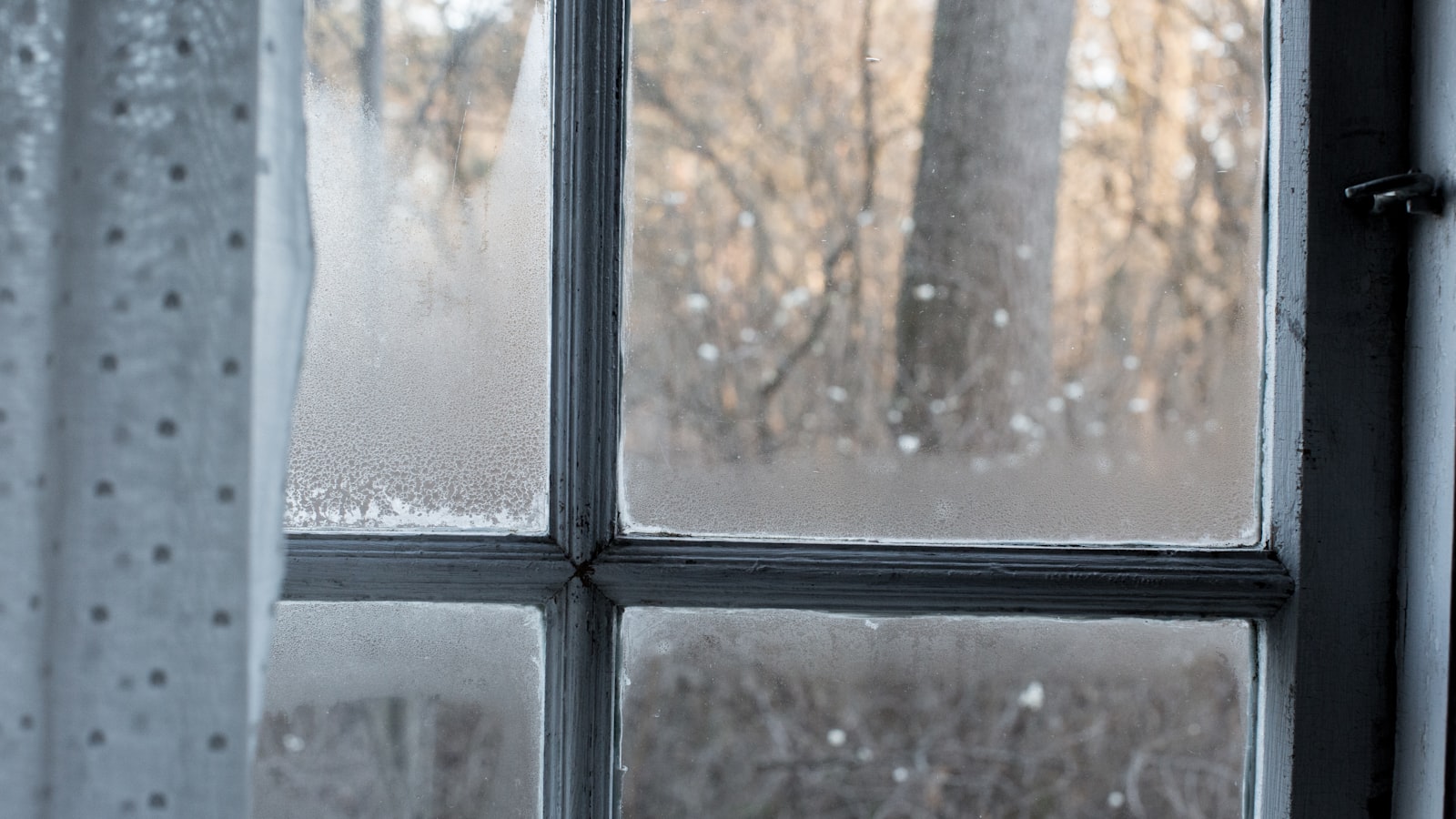
Damp and mould in a flat most often appear where insulation and new windows have shut off the natural air exchange – moisture from cooking, showering and breathing has nowhere to escape and condenses on cold surfaces. A healthy indoor environment keeps relative humidity in the 40–60% range. That is exactly what heat recovery ventilation does: it continuously extracts moist air, brings in fresh air, and thanks to its heat exchanger returns around 90% of the heat back into the home. In this article we explain why opening a window isn't enough to control moisture and how we solve the problem for customers around Šumperk.
Why Damp and Mould Appear After Insulation and New Windows
Older houses and flats used to "breathe" through leaks – around windows, doors and joints, a little air constantly escaped outside while fresh air was drawn in. This uncontrolled exchange is called infiltration. When you replace old windows with new airtight ones and insulate the façade, you effectively stop infiltration. The building becomes cheaper to heat, but at the same time it loses the only route by which moisture used to leave.
Yet a typical household produces a surprising amount of moisture. The sources are:
- cooking, washing up and running the dishwasher,
- showering and bathing,
- drying laundry indoors,
- houseplants and aquariums,
- and the occupants' own breathing and perspiration – even while asleep.
This moisture travels through the air to the coldest spots in the flat: window reveals, the corners of external walls, behind furniture against an outside wall. Wherever the surface temperature drops below the so-called dew point, the water vapour condenses and settles. A damp wall is an ideal breeding ground for mould – it only needs a few days. New windows and insulation therefore don't cause mould directly; they expose inadequate ventilation, which those very leaks used to "take care of".
How Much Humidity Is Healthy in a Flat
For both comfort and health, it is ideal to keep relative humidity between 40 and 60%, with 40–50% often cited as the best compromise. This range isn't chosen at random:
- Above 60%, the share of surviving micro-organisms and dust mites roughly doubles compared with around 40%, and the risk of mould growth rises sharply.
- Below about 30%, the air is too dry instead – the mucous membranes of the airways dry out, the eyes get irritated and breathing becomes harder.
Mould is not just a cosmetic problem, either. It releases spores into the air that can irritate the airways, worsen allergies and asthma, and generally make breathing harder for more sensitive people – children, seniors and allergy sufferers. That is why it makes sense to keep humidity under control before mould even appears, rather than just repeatedly wiping it off the wall.
Why Opening a Window Isn't Enough
An open window will of course remove moisture – the problem is that it can't do so reliably and continuously. In practice, window ventilation runs into several limits:
- Heat loss. In winter, the air you let out carries the accumulated heat away with it. To save money, people then air the room briefly and rarely – and the moisture isn't fully removed.
- Irregularity. During the day at work, at night while asleep, or during a longer absence, no one opens the window. Yet moisture is produced continuously.
- Moisture returns quickly. A single airing in the morning doesn't last – after a shower, cooking or hanging up laundry, humidity climbs again within minutes.
- Noise, dust and pollen. By a busy road or during pollen season, a permanently open window simply isn't a realistic option.
To remove all of the day's moisture through windows, you would literally have to air the rooms wide open several times a day for a few minutes – releasing heat outside every time. This is exactly the situation that mechanical ventilation handles more elegantly.
How Heat Recovery Ventilation Keeps Humidity Under Control
Heat recovery ventilation provides continuous, controlled air exchange without opening any windows. The unit constantly extracts stale, moist air from the places where moisture is generated – the bathroom, kitchen and toilet – and supplies fresh, filtered outdoor air to the living rooms. Moisture is therefore removed continuously and has no time to condense on the walls.
The key to the savings is the heat exchanger (recuperator). In it, the outgoing warm air passes most of its heat to the incoming cold air without the two streams ever mixing. Quality units recover around 90% of the heat this way, with top models reaching up to 95%. So in winter you ventilate at full power and still don't "throw heat out of the window".
An Enthalpy Exchanger Holds the Ideal Humidity
A special enthalpy (humidity) exchanger can return not only heat but also part of the moisture – around 45%. As a result, it doesn't needlessly over-dry the air in winter and passively helps keep humidity right in the recommended 40–60% range. That is the difference compared with plain extraction, which can dry a house out uncomfortably in hard frosts.
Central or Local Solution?
Depending on the type of building, we choose between two approaches:
- Central heat recovery suits new builds and more extensive renovations. The air is distributed by ducting throughout the house and converges in a single unit with a heat exchanger.
- Local (decentralised) heat recovery is the solution for flats and individual rooms where ducting can't be run. A small unit is installed directly into the external wall, with lower purchase costs and simpler maintenance. One device covers a room of roughly up to 50 m². These units work in pairs – one draws air in while the other extracts, and after a while the roles swap to equalise the pressure.
Filters and Maintenance: What It All Rests On
For heat recovery ventilation to protect both your health and your walls over the long term, it needs clean filters. They capture dust and pollen from the incoming air. We recommend:
- checking the filters at least every 3 months,
- cleaning coarse filters (ISO Coarse, formerly labelled G3/G4) roughly every 3 months,
- replacing fine filters (ePM1, formerly F7) usually after 4–6 months – they can't be washed, as that would damage them.
In practice, filters most often end up being replaced once or twice a year. A neglected, clogged filter means weaker airflow, higher noise and power consumption, and lower overall efficiency – which is why we pay attention to it during both design and maintenance. (Filter classes are now formally defined by the ISO 16890 standard, but the older G4/F7 designations are still commonly used in practice.)
How We Tackle Damp and Mould for Customers Around Šumperk
We are GWP Klima – two specialists who together bring more than ten years of experience in the HVAC field. Ventilation and heat recovery have been my (David Marek's) speciality since 2017, and we handle them across the whole Olomouc Region – in Šumperk, Zábřeh, Mohelnice, Jeseník, Šternberk, Bludov and the surrounding area. Our premises are in Bludov, just a short distance from Šumperk.
From our experience in the region, we know that after new windows are fitted, mould most often appears in bedrooms and in the corners behind furniture against north-facing walls, where the surface temperature drops the lowest – which is exactly where we measure first.
When tackling damp and mould, we don't work "from behind a desk". It usually looks like this:
- We inspect the affected spots and measure the current humidity and surface temperatures.
- We identify the moisture sources and assess whether local units are enough or a central system makes more sense.
- We design a solution tailored to the layout of the flat or house and to how you use the space.
- We professionally install the unit and train you in its operation and filter maintenance.
A No-Obligation Consultation
If damp and mould have started to appear in your flat after insulation or new windows, get in touch. We'll discuss what can be done with no obligation and propose a solution that fits both your flat and your budget. Call me on +420 728 977 209 or email [email protected] and we'll arrange a site visit around Šumperk or nearby.
Step-by-step guide
-
Measure the humidity and find the cold spots
Track relative humidity with a hygrometer and watch where water condenses or mould grows – typically window reveals, the corners of external walls and spots behind furniture against an outside wall. The goal is to bring humidity into the 40–60% range.
-
Identify the sources of moisture
Go through the main sources of water vapour: cooking, showering, drying laundry indoors, plants and ordinary breathing. It helps to remove moisture right at the source (a cooker hood, bathroom extraction) and to cut down on drying laundry in living rooms.
-
Choose the type of heat recovery
For new builds and larger renovations, consider central heat recovery with ducting throughout the house. For a flat or a single room where ducting isn't possible, a local unit set into the external wall is the right fit. For winter, consider an enthalpy exchanger that keeps humidity in the ideal range.
-
Have the unit installed professionally
Correct sizing, placement and balancing of airflows fundamentally affect efficiency. Leave the installation to a professional company that will design a solution tailored to your layout and type of use and train you in its operation.
-
Check and replace the filters regularly
Check the filters at least every 3 months, clean the coarse ones and replace the fine ones after 4–6 months. Clean filters maintain full performance, low noise and power consumption, and ensure clean incoming air.